DWEEPTI Yojana opens the path to solar entrepreneurship for rural women in Chhattisgarh
A Policy That Creates Women Solar Entrepreneurs: Chhattisgarh’s DWEEPTI Yojana
Raipur, July 24, 2026/ Chhattisgarh has introduced a first-of-its-kind policy framework that places women’s self-help groups at the centre of rural rooftop solar expansion, not merely as beneficiaries, but as vendors, technicians, entrepreneurs and service providers. The DWEEPTI Yojana, or Decentralised Women Empowerment on Energy and Policy for Transformative Inclusion, has been jointly developed by the state’s Panchayat and Rural Development Department and its technical partner, Transform Rural India, under the Green Economy Transition Mission.
According to the Panchayat and Rural Development Department, Chhattisgarh has become the first state in the country to adopt “a women-led distributed renewable energy policy.” The initiative aims to establish 5,000 women-led energy enterprises over the next five years, generate 50,000 green jobs, and expand access to clean energy for five lakh families and 10,000 institutions across Chhattisgarh.
In collaboration with the Chhattisgarh State Power Distribution Company Limited and district administrations, the department has registered 13 Cluster Level Federations from 12 districts as authorised vendors under the PM Surya Ghar Muft Bijli Yojana. Women are being trained in rooftop solar installation, operation, maintenance and community awareness, creating a local cadre of trained “Solar Didis” capable of providing technical services within their own communities.
To improve affordability, families associated with self-help groups are being offered loans with flexible repayment options for rooftop solar systems. The financing model is designed not only to expand clean energy adoption but also to help women-led enterprises build sustainable businesses in rural areas, in line with the Prime Minister Shri Narendra Modi’s Lakhpati Didi vision by creating skill-based livelihood opportunities beyond conventional self-help group activities.
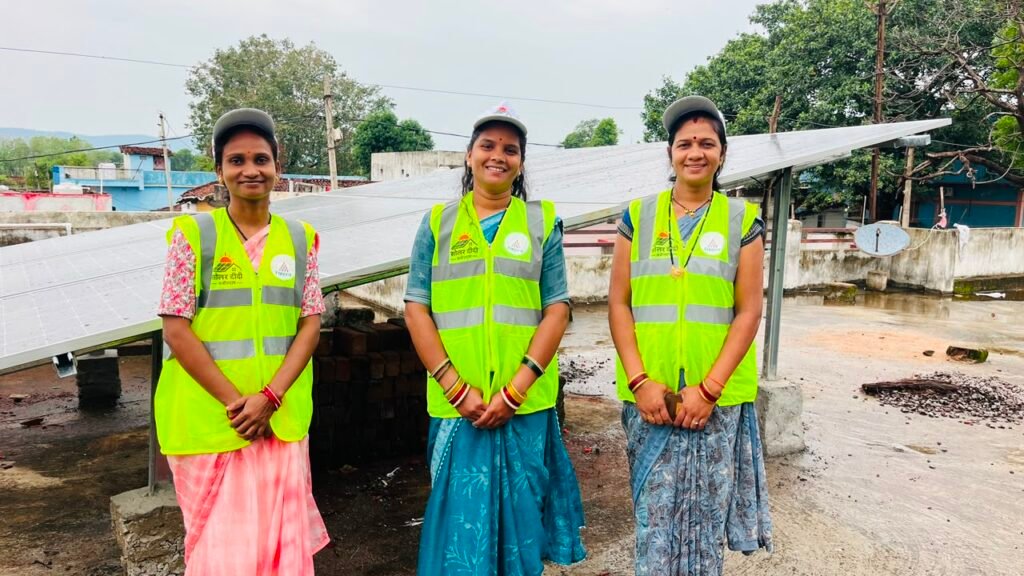
The DWEEPTI Yojana reflects the Chhattisgarh Government’s broader effort to link women’s economic empowerment with the clean energy transition. Chief Minister Shri Vishnu Deo Sai has consistently emphasised expanding livelihood opportunities for women through self-help groups, while Panchayat and Rural Development Minister Shri Vijay Sharma has underscored the role of community institutions in driving sustainable rural development. The initiative brings these priorities together by enabling women to participate in the renewable energy value chain as entrepreneurs, vendors and skilled technicians.
Chhattisgarh Panchayat and Rural Development Secretary Bhim Singh said “Women’s role in the renewable energy space has so far remained limited, seen merely as recipients rather than active stakeholders. The DWEEPTI Yojana marks a shift, positioning women at the heart of the Distributed Renewable Energy sector and enabling them to take on roles as vendors, technicians, managers and entrepreneurs. This initiative reinforces the Prime Minister’s Lakhpati Didi vision, bringing rural women into the mainstream economy through self-reliance in the clean energy sector.”
Kabirdham: Where the Policy Meets the Ground
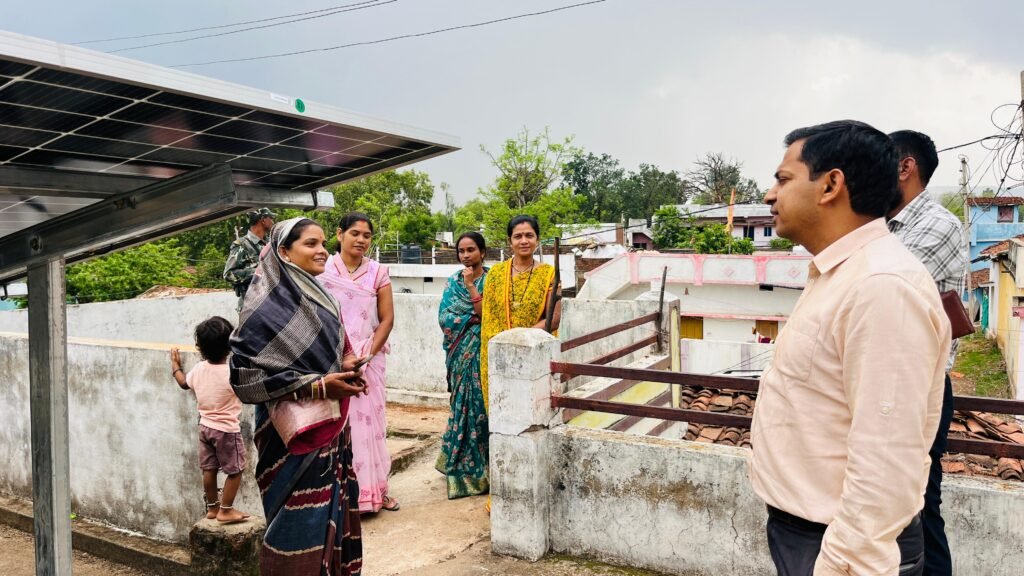
Kabirdham has emerged as one of the first districts where the policy has moved from design to implementation. Working with CSPDCL-RAPM, Raipur, Zila Panchayat Kabirdham (Bihan) facilitated the registration of the Vande Mataram Cluster Level Federation, Kawardha, as an authorised solar vendor. With technical support from Tata, nearly 35 women from Bihan self-help groups received specialised training in rooftop solar installation, creating the district’s first cadre of “Solar Didis.”
The state’s first rooftop solar installation under this women-led initiative was carried out in Samnapur village of Kabirdham. Smt. Anjani Patel of the Mata Bhawani Self-Help Group, under Pragati Aajeevika Gram Sangathan, is among the women trained under the programme.
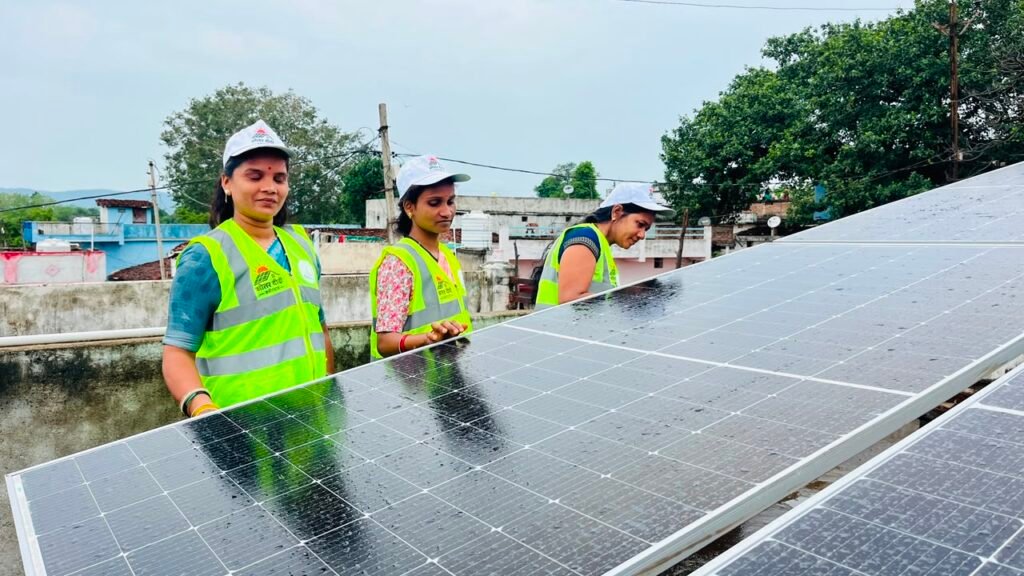
“This work has opened a new livelihood opportunity for us. We are proud that women from self-help groups are installing rooftop solar systems ourselves. It gives us confidence that this can become a sustainable source of income for many women like us,” she said.
Kabirdham Collector Shri Gopal Verma said the initiative demonstrates how livelihood generation and renewable energy can be effectively integrated to deliver long-term benefits for rural communities, while the growing demand for rooftop solar systems is creating new self-employment opportunities for skilled rural women.
Zila Panchayat Kabirdham Chief Executive Officer Shri Abhishek Agrawal said the model is designed to help identified Lakhpati Didis build sustainable, skill-based livelihoods while making rooftop solar systems more accessible in rural areas. Early results have been encouraging, with nearly 40 rooftop solar installation orders received from self-help group members and other villagers, and several systems already installed.
As the DWEEPTI Yojana expands to more districts, this initiative, built around registered women-led federations, trained local technicians and accessible financing, is expected to serve as a practical template for wider implementation across Chhattisgarh.
DWEEPTI Yojana at a Glance (Infographic)
- 5,000 women-led energy enterprises to be established over five years
- 50,000 green jobs to be generated
- 5 lakh families to receive clean energy access
- 10,000 institutions to be covered
- 13 Cluster Level Federations registered as authorised solar vendors across 12 districts
- 35 women trained as Solar Didis in Kabirdham
- 40+ rooftop solar installation orders received in Kabirdham district