Chhattisgarh Leads Nation in Conserving Every Drop of Rainwater; Ranks First in Third Phase of ‘Jal Sanchay Jan Bhagidari’
Chief Minister Shri Vishnu Deo Sai Presents Chhattisgarh’s Community-Driven Water Conservation Model on a National Platform
Water-Stressed Blocks Decline from 26 to 19; Chief Minister Proposes State-Specific ‘Catch the Rain’ Plans and State Water Awards
Chhattisgarh has ranked first in the country in the third phase of the Ministry of Jal Shakti’s ‘Jal Sanchay Jan Bhagidari’ (JSJB) campaign, emerging as a national model for community-driven rainwater harvesting and groundwater recharge. Five districts of the state—Surajpur, Mahasamund, Balod, Balodabazar-Bhatapara and Kabirdham—have also secured places among the country’s top 10 districts for water conservation.
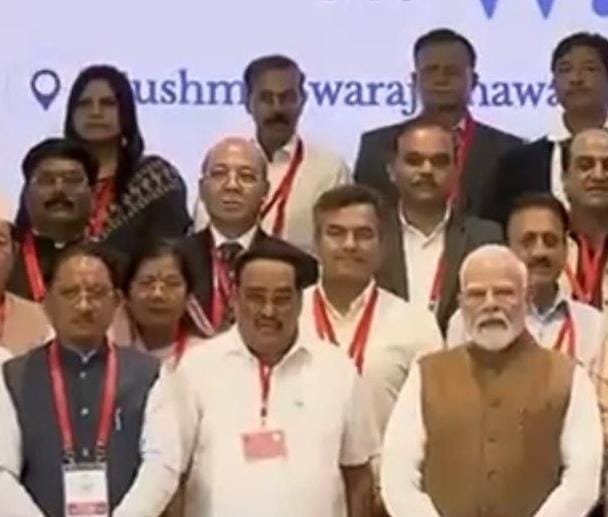
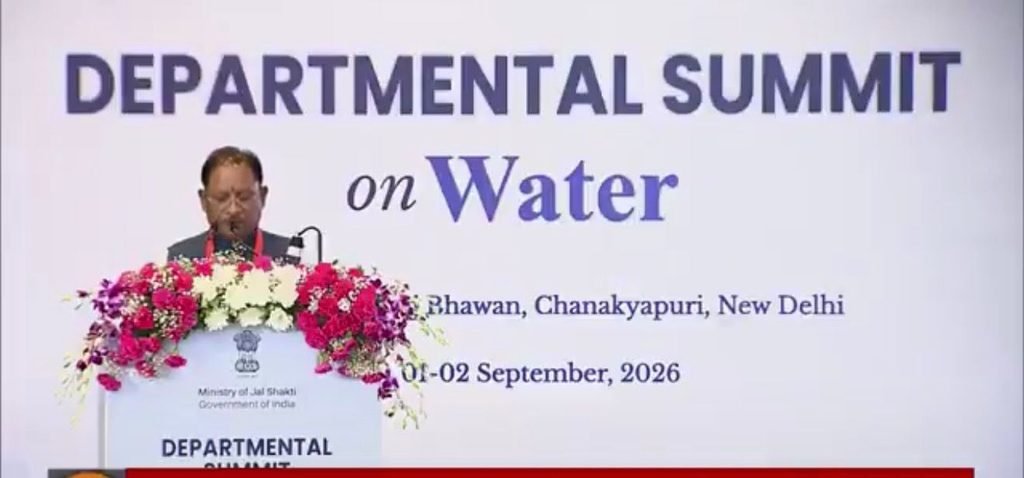
In the presence of Prime Minister Shri Narendra Modi, Chief Minister Shri Vishnu Deo Sai presented Chhattisgarh’s innovations and community-based water conservation model at the Ministry of Jal Shakti’s departmental summit held at Sushma Swaraj Bhawan in New Delhi on Wednesday. During the ‘Catch the Rain’ session, Deputy Chief Minister Shri Arun Sao gave a detailed presentation on the state’s initiatives in rainwater harvesting, groundwater recharge and protection of drinking water sources.
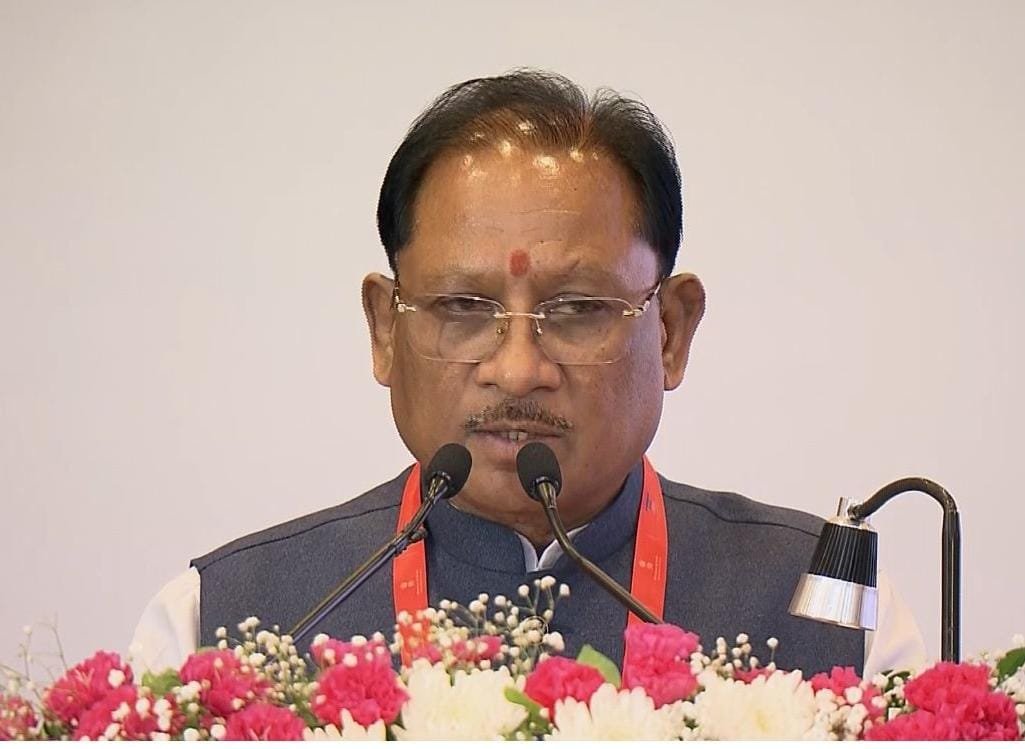
Chief Minister Shri Sai said Chhattisgarh has transformed water conservation from a government programme into a people’s movement by placing farmers, Gram Panchayats, Jal Sakhis, Jal Mitras and local communities at its centre.
Chhattisgarh Rises from Second to First Position Nationally
Chhattisgarh has consistently remained among the country’s top-performing states across all three phases of the Jal Sanchay Jan Bhagidari campaign.
Under JSJB 1.0, 4,05,561 water structures were created in the state, securing Chhattisgarh the second place nationally. In JSJB 2.0, 24,07,456 structures were registered, of which 23,07,768 have been completed, with the state again ranking second.
In JSJB 3.0, Chhattisgarh moved to the first position nationally, with 79,775 water structures registered and 77,719 completed.
The campaign focuses on retaining rainwater locally, preventing runoff and enabling maximum groundwater recharge through water-harvesting structures suited to local geographical conditions.
Farmers’ ‘5 Per cent Model’ Emerges as an Example of Community Participation
Highlighting an innovative initiative from Koriya district, Chief Minister Shri Sai presented the ‘5 Per cent Model’, under which farmers voluntarily make around five per cent of their agricultural land available for rainwater harvesting and groundwater recharge.
Water conservation structures are developed on this portion of farmland to retain rainwater and allow it to percolate into the ground gradually. Farmers contribute land, while Panchayats, local communities and government departments work in coordination to develop the structures.
Geo-tagging, regular monitoring and progress reviews have been integrated into the initiative, with Jal Sakhis, Jal Mitras, farmers and Panchayat representatives playing an active role at the grassroots level.
Recalling his roots in a farming family and his experience of ploughing fields in his native village, Bagiya, Chief Minister Shri Sai said that water for farmers is directly connected to their crops, families, livelihoods and future. This understanding, he said, has guided the government’s approach of putting farmers and villages at the heart of water conservation.
Five Chhattisgarh Districts Among National Top 10
Chhattisgarh’s performance is also reflected at the district level, with Surajpur, Mahasamund, Balod, Balodabazar-Bhatapara and Kabirdham securing places among the country’s top 10 districts.
Rainwater harvesting and groundwater recharge works in these districts have been undertaken at the village and Gram Panchayat levels, combining locally suitable structures with active community participation.
Chief Minister Shri Sai said the achievement demonstrates that when government programmes are backed by public participation, even a challenge as significant as water conservation can be transformed into a broad-based social movement.
Water-Stressed Blocks Decline from 26 to 19
The impact of the state’s water conservation efforts is also reflected in groundwater conditions. The number of water-stressed blocks has declined from 26 to 19, while five critical blocks are expected to move into the normal category.
Along with constructing new water-harvesting structures, the state is focusing on restoring traditional water sources, groundwater recharge, mapping and geo-tagging of structures, and regular monitoring.
Chhattisgarh has adapted Prime Minister Shri Narendra Modi’s message of ‘Catch the Rain — Jahan Jal Gire, Wahin Sahejein’ to its diverse geographical conditions, with different types of structures being developed according to local rainfall patterns and water requirements.
Chief Minister Proposes State-Specific ‘Catch the Rain’ Plans
At the national summit, Chief Minister Shri Sai proposed that every state prepare its own ‘Catch the Rain Plan’ based on geography, rainfall patterns, groundwater conditions and local requirements, enabling clear targets and strategies for water conservation.
He also suggested introducing ‘State Water Awards’ to encourage better-performing states, strengthening mapping of water structures through BISAG-N and conducting quarterly reviews of campaign progress under the chairmanship of the Chief Secretary.
The Chief Minister said the combination of technology, regular monitoring and community participation can make water conservation initiatives more effective and result-oriented. He also expressed Chhattisgarh’s readiness to share its successful models and experiences with other states.
Water Conservation to Support Agriculture and Rural Livelihoods
The water conservation drive is expected to strengthen agriculture by improving groundwater recharge and availability of water for irrigation while reducing dependence on the monsoon. Better conservation of drinking water sources can also improve water security in rural areas and reduce the time and labour required by families, particularly women, to collect water.
A national target has been set to create two crore new water structures by May 31, 2027, and Chhattisgarh’s community-driven approach can contribute significantly towards this broader objective.
Chief Minister Shri Sai said Chhattisgarh, which accounts for around four per cent of India’s geographical area, has demonstrated that water conservation is not merely about constructing structures but about creating a shared responsibility among the government, farmers, Panchayats and society to secure water for future generations.
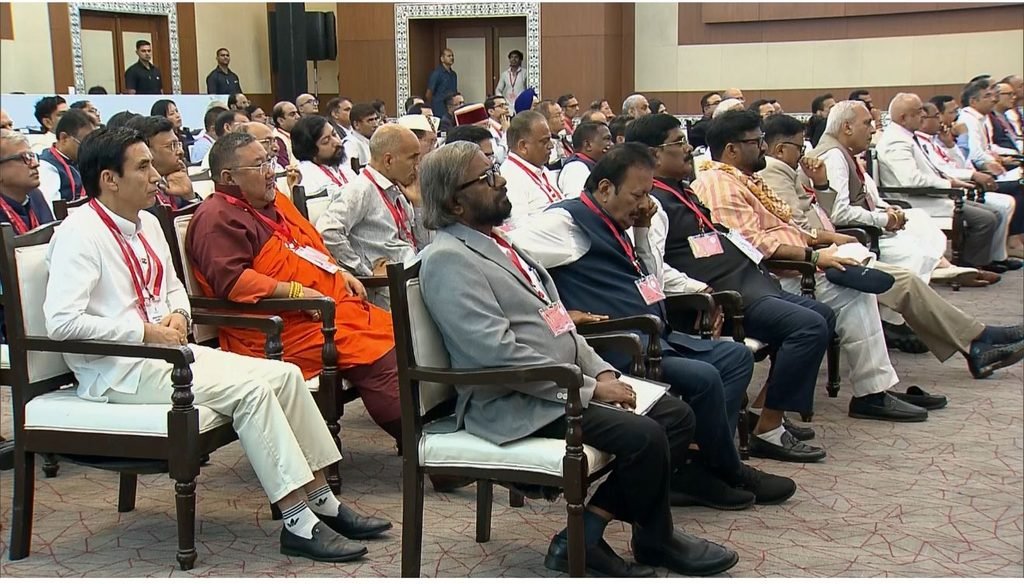
Union Minister of Jal Shakti Shri C. R. Patil, water resources ministers from various states and senior officials attended the summit. Principal Secretary to the Chief Minister Shri Subodh Kumar Singh, Secretary of the Water Resources Department Shri Rajesh Sukumar Toppo, and senior officials of the concerned departments were also present.