

New Criminal Laws Have Transformed India’s Justice System: Chief Minister Shri Vishnu Deo Sai
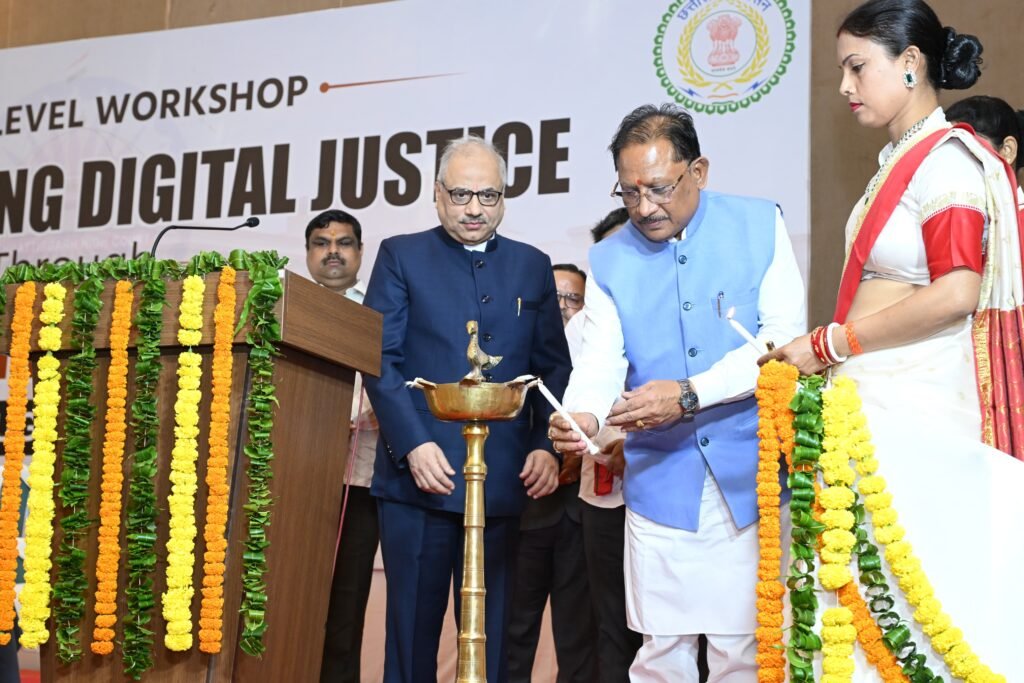
Chhattisgarh Poised to Lead Digital Justice Reforms with Effective Implementation of New Criminal Laws
Raipur, August 2, 2026/Describing the new criminal laws as a historic milestone in India’s judicial reforms, Chief Minister Shri Vishnu Deo Sai today said that the legislation has fundamentally transformed the justice delivery system by making it faster, more transparent, accessible and citizen-centric. He said the primary objective of the new legal framework is not merely to punish offenders but to ensure timely, transparent and affordable justice for every citizen through the effective use of technology and scientific evidence.
Addressing the State-Level Workshop on “Strengthening Digital Justice” in Raipur today, Chief Minister Shri Sai said that under the leadership of Prime Minister Shri Narendra Modi, nearly 150-year-old colonial criminal laws have been replaced with the Bharatiya Nyaya Sanhita, Bharatiya Nagarik Suraksha Sanhita and the Bharatiya Sakshya Adhiniyam, ushering in a new era of citizen-focused justice.
Shri Sai said the earlier laws were enacted at a time when digital technology, CCTV surveillance, electronic records and modern forensic science did not exist. With the nature of crime evolving rapidly, technology has become indispensable to the justice system. The new laws, he said, accord legal recognition to digital evidence, CCTV footage, mobile chats, electronic records and scientific forensic investigation, significantly strengthening criminal investigation and prosecution.
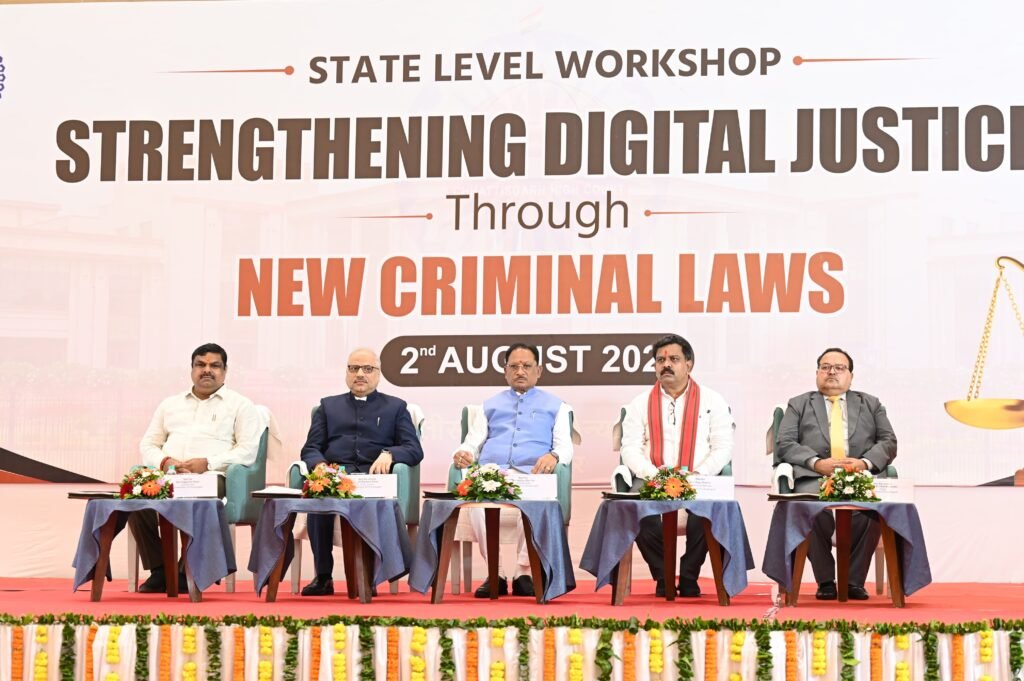
Chief Minister Shri Vishnu Deo Sai further said that the proposed branch of the National Forensic Sciences University in Chhattisgarh would provide a major boost to criminal investigation and judicial processes. He noted that the e-Sakshya platform is playing a crucial role in the secure preservation and authentication of electronic evidence.
Highlighting the impact of digital transformation, Shri Sai said that judicial processes have become significantly faster and more efficient. While serving summons earlier took several days, e-Summons now enables instant delivery along with digital tracking. The Nyaya Shruti platform, he said, is facilitating secure digital recording of court proceedings while strengthening online and hybrid hearings.
Chief Minister said the Crime and Criminal Tracking Network and Systems (CCTNS) has digitally connected police stations across the country, enabling instant access to criminal records and faster police action. He informed that all police stations in Chhattisgarh are now functioning online and 1,97,547 FIRs have so far been registered digitally in the State. Citizens are also being provided digitally signed copies of FIRs through electronic means.
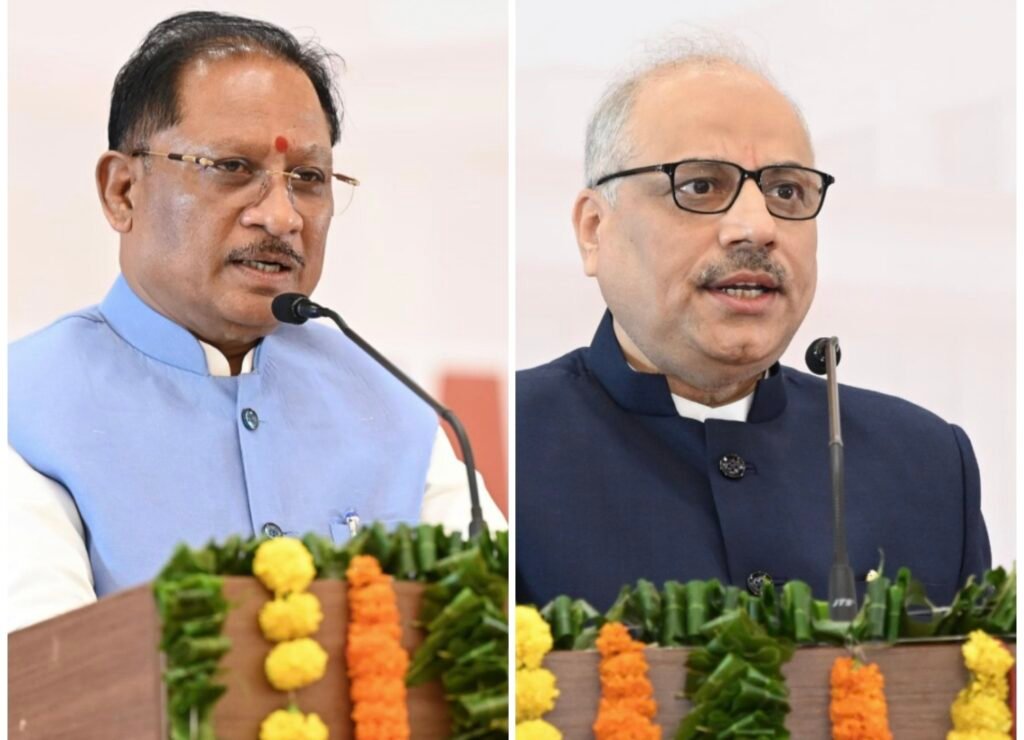
He further said the Inter-Operable Criminal Justice System (ICJS) has established secure digital coordination among the judiciary, police, prosecution, prisons and other related institutions, enabling faster information sharing and significantly reducing delays in judicial proceedings.
According to Shri Sai, the new criminal laws have simplified the justice delivery process, reduced procedural complexities and made justice more transparent and cost-effective. Paperwork has been minimised while better outcomes are being achieved with available resources. He added that the laws are proving particularly effective in tackling emerging challenges such as cybercrime. In this direction, the State Government has established nine new cyber police stations and launched extensive public awareness campaigns.
Emphasising the importance of continuous capacity building, Chief Minister Shri Sai said that technology is evolving rapidly and every stakeholder associated with the justice system must receive regular training. He reaffirmed the State Government’s commitment to sustained training, technical capacity building and continuous monitoring for the effective implementation of the new criminal laws.
Speaking on the occasion, Chief Justice of the Chhattisgarh High Court, Justice Shri Ramesh Sinha, said that effective implementation of the three new criminal laws would make the State’s criminal justice system more transparent, scientific, technology-driven and efficient. He said the success of the Bharatiya Nagarik Suraksha Sanhita, Bharatiya Nyaya Sanhita and Bharatiya Sakshya Adhiniyam would depend not merely on their enactment but on their effective implementation through coordinated efforts by all concerned institutions.
Justice Shri Sinha said the discussions at the workshop extended beyond digital platforms and reflected a broader transformation in criminal investigation and judicial processes. Platforms such as e-Sakshya, e-Challan, Nyaya Shruti and digital forensics are instrumental in realising the objectives of the new laws. He described e-Sakshya as an integrated evidence management system capable of ensuring the authenticity and reliability of evidence.
He observed that the justice process begins at the crime scene and stressed that scientific, impartial and transparent investigation at the initial stage strengthens the entire judicial process. While technology cannot replace judicial wisdom, it can substantially enhance its effectiveness, he said.
Justice Shri Sinha informed that during June, nearly 9,910 cases were heard through video conferencing in district courts, while the High Court conducted virtual hearings in 58 cases. He urged all stakeholders to make extensive use of the Nyaya Shruti platform.
He further noted that the Bharatiya Sakshya Adhiniyam, 2023 grants comprehensive legal recognition to electronic and digital records, while the Bharatiya Nagarik Suraksha Sanhita, 2023 promotes the use of technology in crime registration, investigation, search, seizure, video recording and electronic communication. Expressing confidence in coordinated institutional efforts, he said Chhattisgarh has the potential to emerge as the country’s leading State in the effective implementation of the new criminal laws and digital justice systems.
Deputy Chief Minister and Home Minister Shri Vijay Sharma described the workshop as a landmark initiative in the history of the justice system. He said that following a review of the Inter-Operable Criminal Justice System (ICJS) by Chief Minister Shri Vishnu Deo Sai, directions were issued for its speedy implementation, accelerating the digitisation of justice delivery and law enforcement.
Shri Sharma said the spirit of the new criminal laws is to ensure that judicial proceedings do not remain unnecessarily pending from subordinate courts to the Supreme Court, and that every citizen receives justice within a stipulated timeframe. He advocated the “One Data, One Entry” approach, elimination of manual FIR processes and wider adoption of digital tools such as e-Forensics, e-Sakshya, Nyaya Shruti, CCTNS, NEFIS, the CRP-I application and DNA sampling.
He reaffirmed that under the leadership of Chief Minister Shri Vishnu Deo Sai, the State Government remains committed to providing all necessary resources for modernising the justice system and ensuring timely, transparent and effective justice for every citizen.
On the occasion, Law and Legislative Affairs Minister Shri Gajendra Yadav, High Court Judge Justice Shri N.K. Chandravanshi, senior judges of the High Court, Principal Secretary (Home) Smt. Niharika Barik Singh, Principal Secretary, Law and Legislative Affairs Smt. Sushma Sawant, and Director General of Police Shri Arun Dev Gautam were also present. The workshop was attended by district judges, senior police officers, CCTNS nodal officers, prosecution officials, forensic science experts, medical college doctors, legal experts and officers from various departments .